
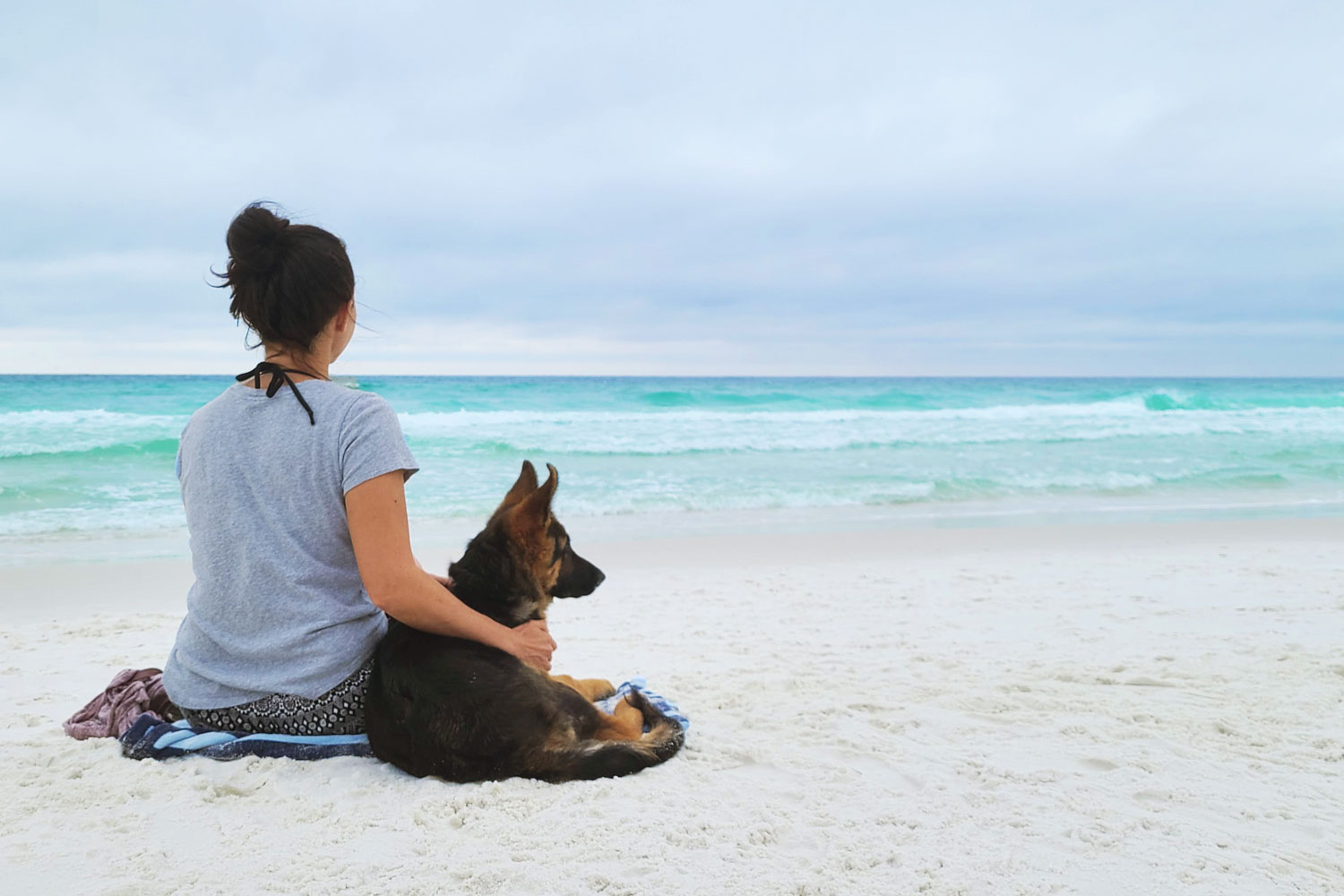
The Secret Shortcut to a Confident Puppy
(And How to Navigate “Fear Periods” Safely)
Many puppies go like this: one day they are a happy, brave little explorer, and the next day they are suddenly terrified of a trash can or a fire hydrant they’ve walked past a hundred times.
Your first instinct might be to worry that your puppy is fearful by nature or shifting into an anxious dog. Don’t panic. What you are witnessing is a completely normal developmental phase called a Fear Period. And even if your puppy is acting terrified – with the right help and guidance, this is a temporary state for them.
The Truth About Developmental Fear Windows
Puppies typically go through two distinct fear periods: one between 9 to 14 weeks, and a major secondary one somewhere between 6 to 10 months.
During these windows, a puppy’s brain undergoes massive neurological shifts. Stimuli that used to be neutral or mildly interesting suddenly register as an immediate threat.
The biggest mistake owners make during a fear period is trying to force the puppy to “face their fears.” If your puppy panics at a park bench and you drag them by the collar to sniff it, you aren’t teaching them that the bench is safe; you are teaching them that you will force them into dangerous situations when they are terrified. This breaks trust and can lock that specific fear into place permanently.
Another mistake that is all too common is to try and soothe the pup’s fearful reaction by telling them it’s ok and showing concern for their emotion. I totally get how this is a perfectly normal human reaction, but doing so is counterproductive because it confirms for your puppy that their fear is justified. Puppies are fantastic readers of our body language and mood and interpret your concerned demeanor and voice as a signal that the danger is real.
Instead, the rule is simple: keep the leash loose, and let them observe neutrally without pressure. Show them with your body language and attitude that you genuinely see no danger. Linger around the fear object, approach it, and turn your back to it. If it’s a bench – sit on it, or place your hand or foot on the object. But in a very nonchalant way. Look around you, look at your puppy, try to engage them in a tiny play session near the scary object.
My Secret Shortcut: The Puppy Road Trip
To build a truly bulletproof, confident adult dog, you need an immunization strategy against the world. My absolute favorite shortcut to achieve this is The Puppy Road Trip.
Many owners think socializing a puppy means letting them play with other dogs or meeting new people. That can actually create an over-stimulated, frustrated dog. True socialization means exposing your puppy to as much of our human world as possible during the crucial brain development windows. It’s teaching your puppy to remain calm, neutral, and relaxed in a wide variety of strange environments.
Even a short road trip is the ultimate exposure tool because it mimics a high-volume learning environment and we don’t get to run home from the new and the scary. We simply don’t have a choice but to live and make peace with our environment. Here are the key takeaway your puppy is going to internalize:
- The Car as a Safe Haven: The vehicle serves as your puppy’s secure mobile den. They can look out the window at bustling parking lots, delivery trucks, moving shopping carts, and crowds of people while feeling completely insulated and safe.
- Multiple Micro-Exposures Throughout the Day: The puppy will exit and enter the hotel multiple times a day, ride in an elevator, see several different gas stations and hear traffic noise, accompany you to have dinner on a busy patio. They will have no choice but to see that you’re not afraid and they are also not afraid.
- Trust and Relationship Building: A road trip allows you to demonstrate to your puppy that you’re great to roam the Earth with. You keep your little pack safe, provide food, water, shelter and rest, and have great fun along the way! Even a short 3-day road trip will give your bond a tremendous boost.
And a bonus: if your puppy was still struggling with housetraining – being on the road with them gives you a great opportunity be very much hands on with them and usually will help the puppy to finally form that habit of waiting to go potty outside.
The Takeaway
Fear periods will happen, but they are temporary. By mastering the art of acting entirely neutral towards the “scary objects” and using the road trip shortcut for built-in exposure boost, you will navigate these developmental bumps like a pro. And a bond of trust that you’re building along the way will last a lifetime.
Looking for the perfect environment for your pup?
At Gardens von Lotta, we specialize in maintaining authentic home routines, stress-free environments, and expert handling for dogs of all developmental stages. Explore our Services or connect with us today to reserve a limited spot at our Sandy Springs estate.
This makes me feel so much better about planning our next trip. I’ve been stressed about how my young dog will handle a hotel environment, but after watching the video, I can see how it can be done. Will frame the whole vacation as a confidence-building exercise.
Perfect! Your youngster will be so excited to travel with you. Enjoy your trip!