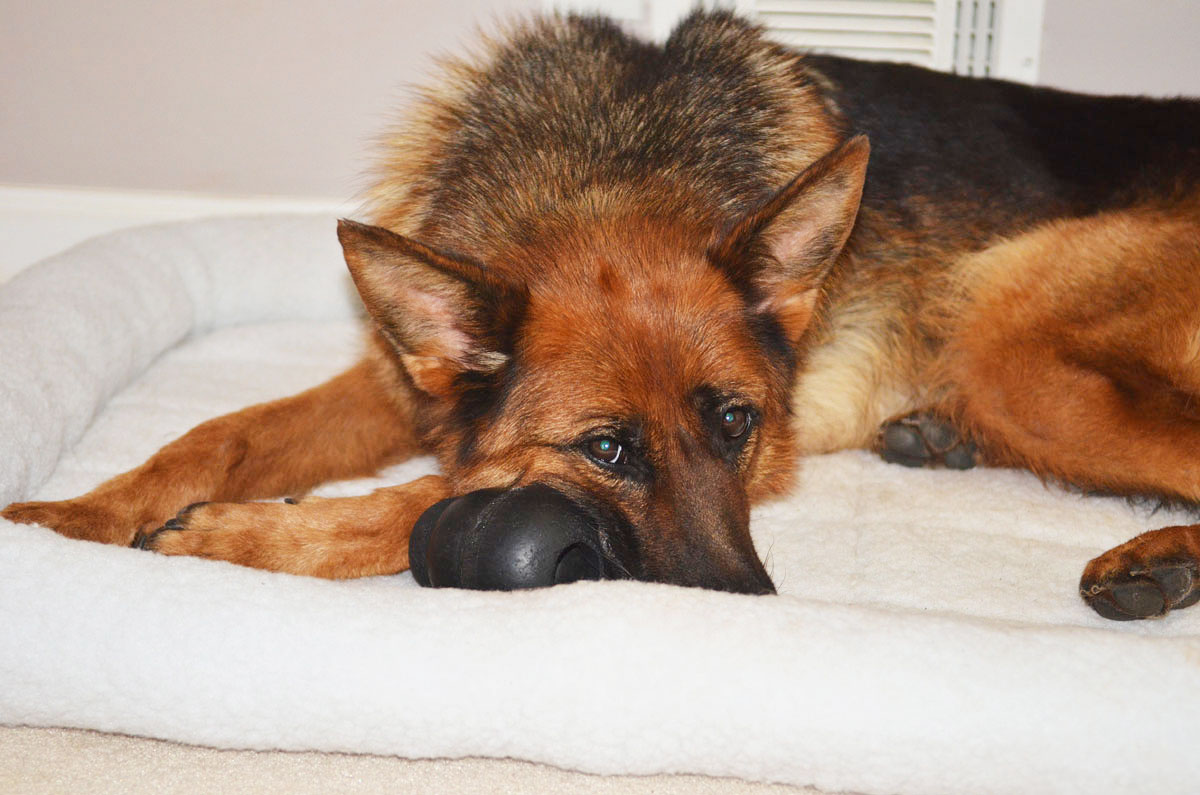
From Growling to Relaxed: A Real Resource-Guarding Case Study.
Hearing a deep growl come from a 4-month-old puppy is a sound that makes most dog owners freeze. That was my introduction to Tinka.
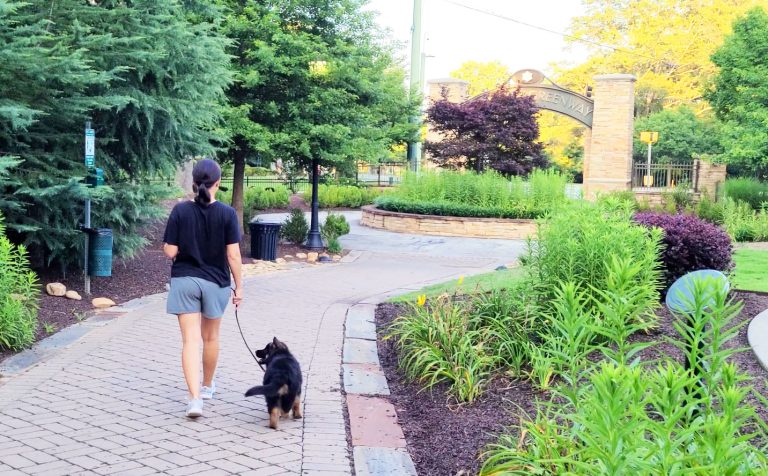
Tinka came to me as a 4-month-old German Shepherd puppy whose owners had given up on her. They said she was “too much to handle.” At her very first mealtime, she growled at me when I placed her food down. A GSD is a powerful breed, and I knew immediately this wasn’t a behavior I could ignore. As the days went by, I also noticed she was afraid to play tug of war, and seemed to shut down whenever she was on a leash – both signs of mistrust.
Why Resource Guarding Happens
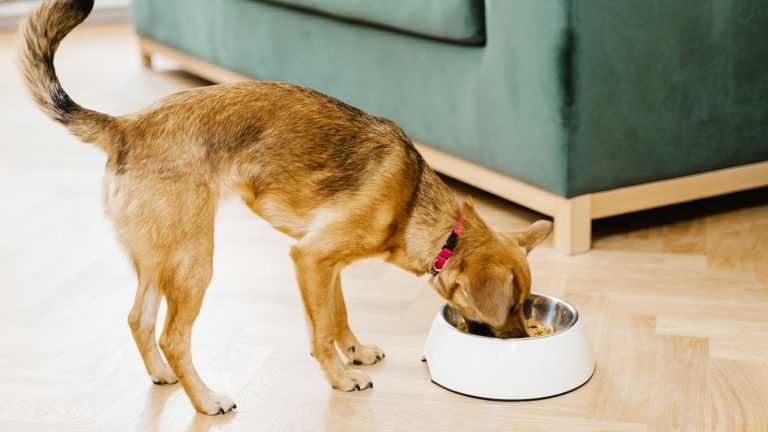
Fear-based guarding, also called food aggression, often shows up in pups who’ve had inconsistent handling or unpredictable experiences with people around food or other resources. When a dog is eating and someone approaches, messes with the food, or takes it away entirely, it can activate a very primal survival instinct – even in the meekest of pups – the instinct to protect their most valuable resource: food. This part of a puppy’s brain is very primal. It doesn’t know there’s more food coming at the next mealtime, and it doesn’t know you’re reaching in because you want to teach them something. Trust breaks, and resource guarding becomes a real thing.
Not every dog guards their food loudly. Some just get a little quiet – stiffening slightly, waiting for you to step back before they start eating, or leaning away if you reach to pet them mid-meal. That doesn’t necessarily mean something’s wrong. Eating is a vulnerable moment for any dog, and a little instinctive caution around it is normal even in dogs who’ve never had a single bad experience with food. Tinka’s guarding wasn’t so subtle though…
Rebuilding Trust – Without Rewarding the Growl
To rebuild trust, I had to show Tinka that I wasn’t the bad guy – that I wasn’t going to interfere with her eating in any way. She was safe. And yet I couldn’t just place the food down and walk away. Why? Because that would show her that growling worked. That when she told me “leave me alone, this food is mine,” I listened. I got intimidated and left. That’s not a message I wanted to send her either.
So I restructured her mealtime.
Step 1: Introduce a Crate
Feeding her in a crate did three things:
- Served as a physical barrier to keep me safe
- Prevented Tinka from being able to move away if she felt threatened or uncomfortable
- Most importantly, created a den-like environment that quickly helped her feel safer and more relaxed
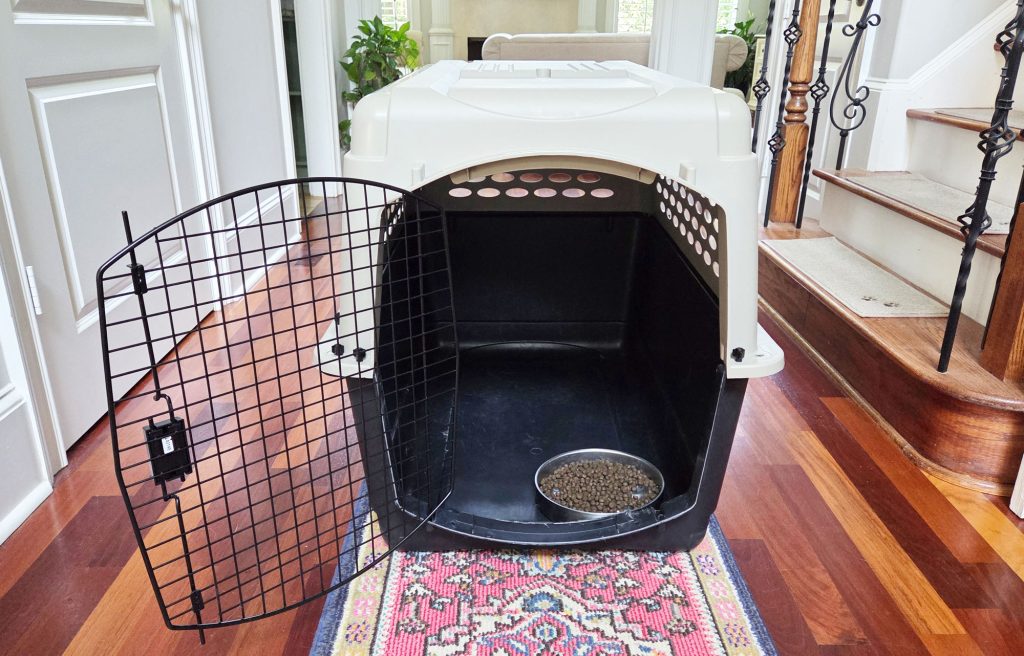
The best type of crate for this purpose is a plastic travel-style crate, such as a Vari Kennel – not a wire crate. Wire crates are too open on all sides and don’t provide the same “I am safe and cozy in my den” feeling.
Step 2: Place the Food, Close the Door
At mealtime, I lured Tinka with a couple of treats into the crate, placed her food down, and closed the door. Because she was still a puppy, I felt comfortable leaning down and placing food in front of her, even though that’s when the growling would start.
Step 3: Sit Nearby and Don’t Engage
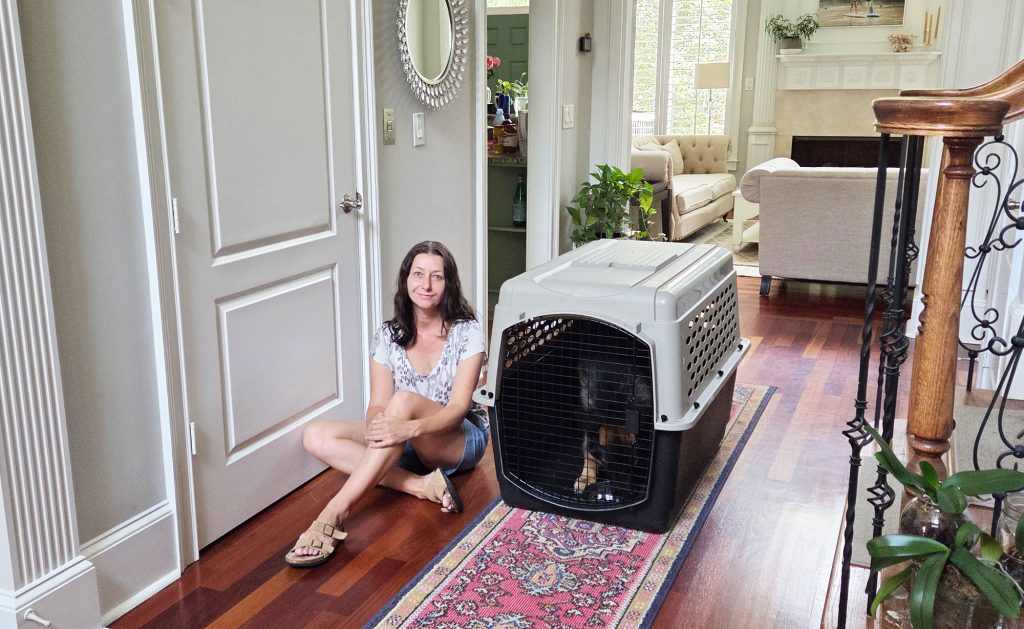
This step is essential. Instead of walking away from the crate, I sat on the floor right next to it, positioned sideways rather than facing her head-on. I knew it was critical not to show any fear or hesitation here, so I stayed entirely relaxed and nonchalant, acting as though I didn’t hear any growling at all. My body language was telling her the growling had zero effect: no one was scared, no one even noticed it.
Important: I didn’t talk to her at all during this exercise – not when placing the food down, not when closing the door, not while sitting, not when opening the crate. Trying to soothe a growling dog with your voice can backfire, because it signals that you do see it as a problem. We want to show the dog there’s nothing here worth noticing.
Sitting sideways rather than facing a dog head-on is also far less confrontational. It’s the same reason we introduce two unfamiliar dogs by walking them parallel to each other rather than face to face. Parallel movement makes them companions on the same team, while direct eye contact reads as confrontation.
So I wasn’t looking at Tinka at all – the whole time she ate. As the food in her bowl disappeared, so did the growling.
Step 4: Release and Connect
Once Tinka finished eating and licked the bowl clean, I’d open the crate and let her out. We’d go smell things, interact, share a few pets. Sometimes I’d bring a couple of treats and ask her to follow me and sit – just a minute of simple obedience, to give her easy wins and reinforce that we were on the same team.
Step 5: Repeat, Every Meal, Without Exception
One time didn’t fix this. It took a solid week for Tinka to stop growling entirely. Each day, the growling grew a little less intense, but it was still there. Trust isn’t rebuilt in a conversation or a couple of tries. It’s built through a string of consistent behaviors, repeated over time. Anyone who’s had their trust broken by someone knows exactly what that takes.
You have to be committed to sitting with your dog at every single mealtime. Consistency is what makes this work.
Step 6: The Turning Point
On day 8, I placed the food down and closed the door. Tinka started eating, and she didn’t growl! I wanted to jump up and down, but instead I said nothing and walked away. Now that she wasn’t telling me to leave with her growls, I could actually give her something even better: a peaceful mealtime, completely alone, with no one around to worry about at all. That was a powerful message for her to receive.
How Far She Came
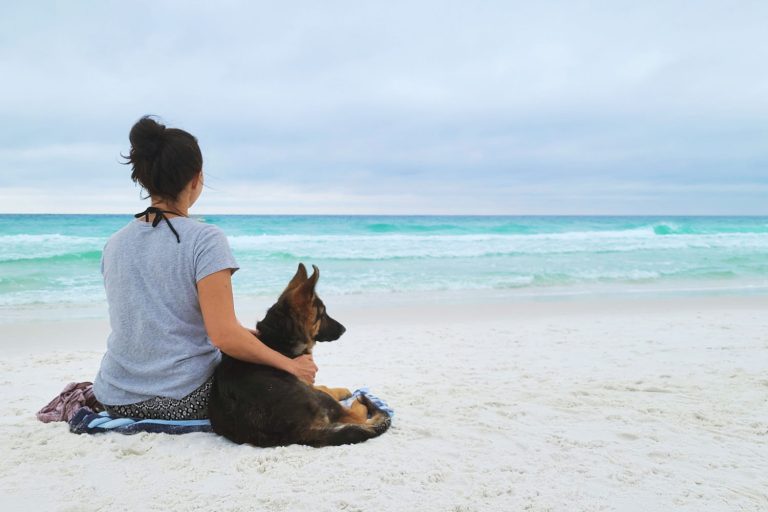
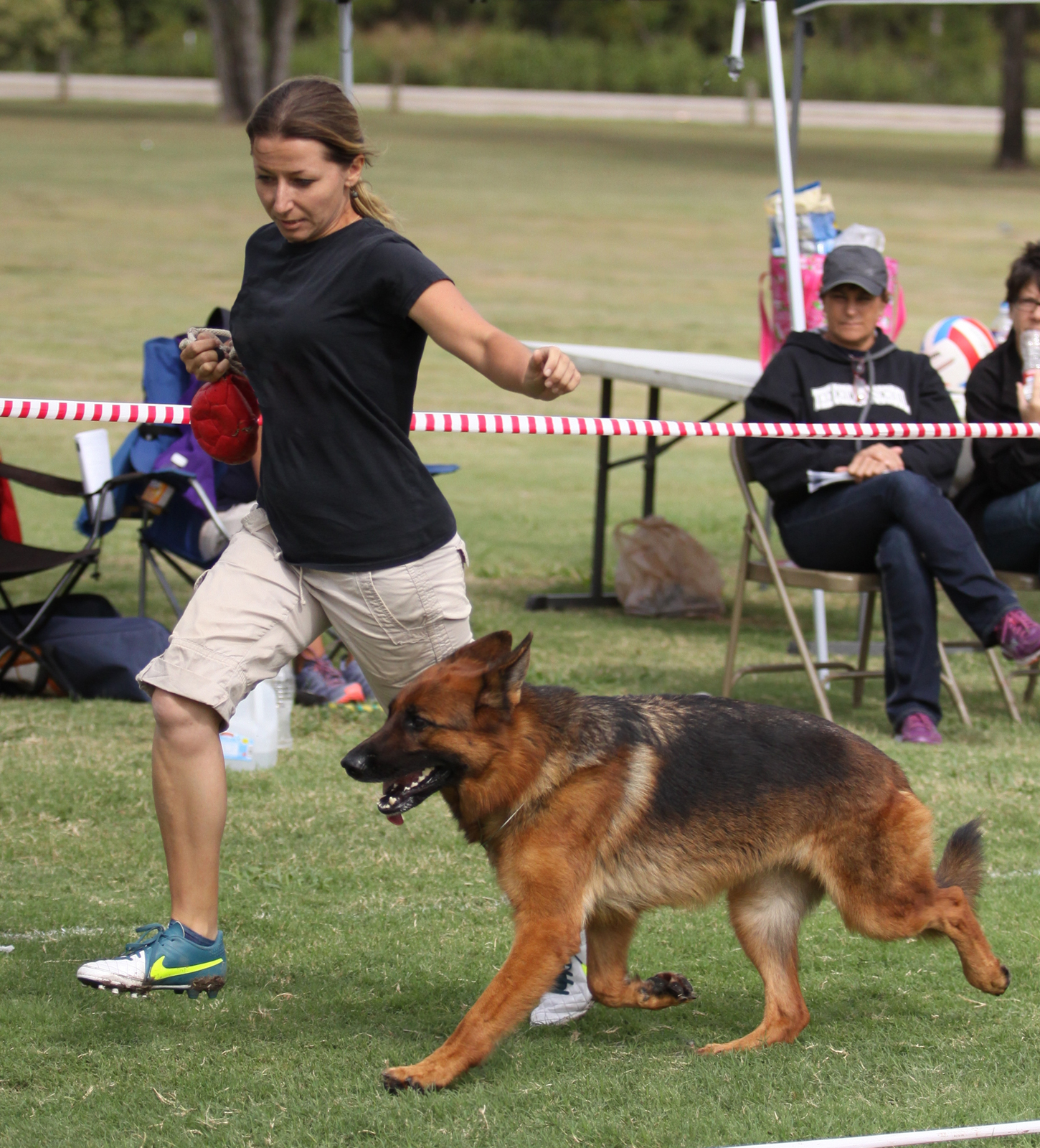
Tinka has never again showed signs of food aggression or resource guarding. That same trust we built at mealtime became the foundation for everything that came after – she’s blossomed into one of the most talented dogs I’ve ever worked with. Together, we achieved BH, SchH1, and SchH2, and traveled to Germany to train, title, and compete in the World GSD Show. After that, she won the High Performance Working Dog Class Female award at the National Show in Dallas, TX (2014). And I could take things out of her mouth without any hesitation.
Tinka has since passed from old age. She lived a long, full life, and that mealtime she and I sat through together, all those years ago, was just the first of many things we built trust through. I’ll always be grateful for what she taught me about patience – and what patience gave back to her.
“Leave them alone at mealtime” works as a trust-building approach broadly, even for dogs with zero guarding history: it respects an instinct that’s present in some form in nearly all dogs, rather than only intervening once it becomes a visible “problem.”
A Word of Caution
⚠️ The method described above worked wonders for Tinka. It may not work for every dog in every situation. This was a relatively mild case, and every dog requires an individual approach. Some cases of resource guarding are more severe and take longer, or require additional support like muzzle training or veterinary guidance. There is always a real risk of getting bitten when working with a guarding dog.
If your pup is showing signs of food or item guarding – stiffening, raised hackles, glaring, growling – I strongly recommend working with a professional trainer or behaviorist rather than attempting this alone. The same goes for dog-to-dog food aggression.
If that sounds like your dog, request a training evaluation – we’ll build a plan to rebuild trust around mealtime safely, for both your dog and your household.
This post contains one affiliate link. If you purchase through it, I may earn a small commission at no extra cost to you.
Related: Let Them Eat in Peace: The Trust-Based Approach to Preventing Food Guarding – how a consistent, calm mealtime routine can prevent resource guarding from developing in the first place.