Let Them Eat in Peace: The Trust-Based Approach to Preventing Food Guarding
If you have ever brought home a new puppy, you have probably received this common piece of advice:
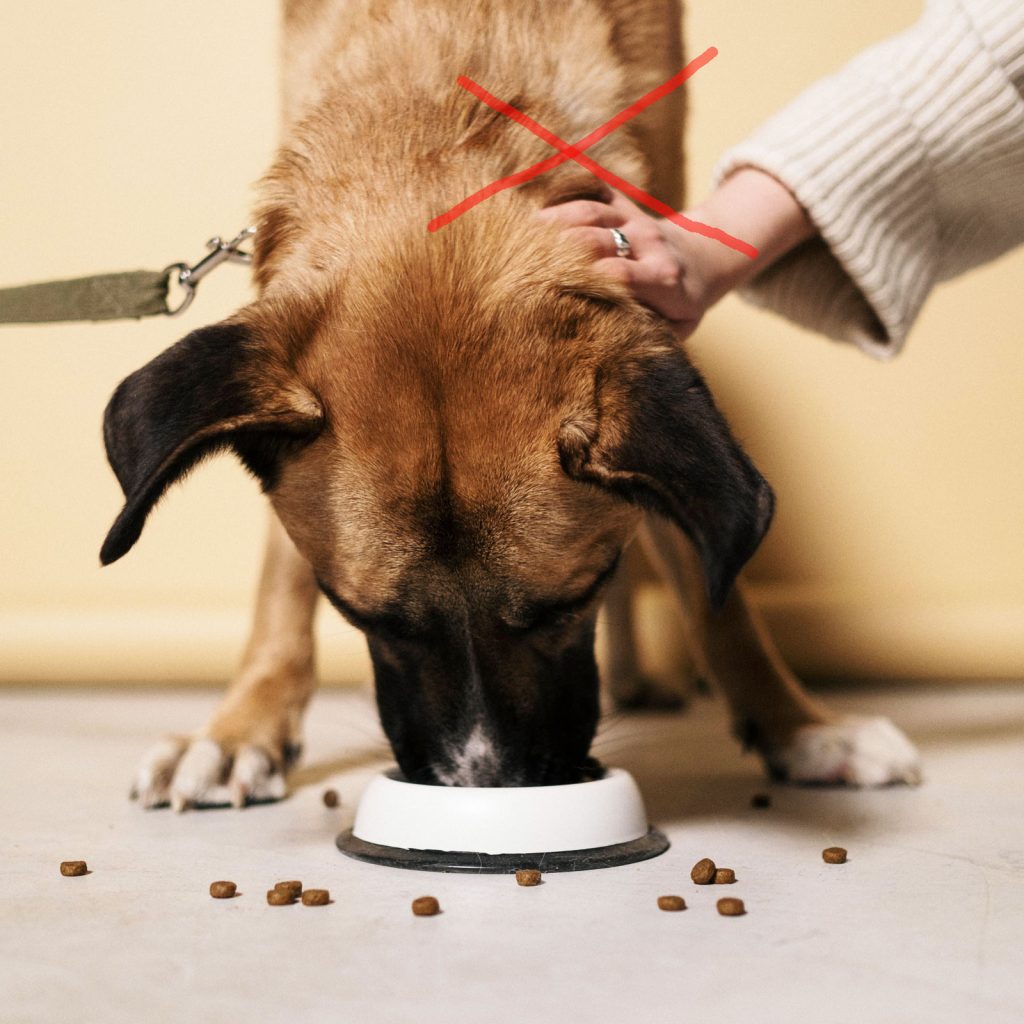
“Make sure you stick your hands in their food bowl, pet them while they eat, or take the bowl away and give it back so they know you’re the boss and don’t learn to guard it.”
While this advice comes from a well-intentioned place, it is actually one of the absolute worst things you can do to a young dog. In fact, following this traditional, outdated method is a fast track to accidentally creating the exact resource guarding behaviors you are trying to prevent.
To understand why, we have to look at mealtime through your puppy’s eyes and shift our approach toward building genuine trust.
The Problem with the “Messing with the Bowl” Method
Imagine you are sitting down at a nice restaurant, enjoying a steak. Suddenly, the waiter walks up, sticks his hand on your plate, moves your food around, or whisks the plate away entirely for a few seconds before handing it back.
If this happened every single time you sat down to eat, you would quickly become anxious, tense, and frustrated. The next time the waiter walked toward your table, you might shield your plate with your arm or snap at him to leave you alone.
Your puppy reacts the exact same way. When you constantly hover over their bowl, touch their food, or take it away to “test” them, you are not teaching them that you are the leader. You are teaching them that humans are unpredictable, annoying threats to their most prized resources. You are actively training them to worry that their food is in danger, which triggers their natural survival instinct to protect it.
Do this a few times, and even a puppy who had no natural inclination towards resource guarding might start acting tense, anxious and even start growling.
Even well-meaning advice like walking up to toss extra “high-value treats” into the bowl can backfire. A dog doesn’t always track whether you are adding or subtracting value; all they see is a human reaching toward their possession, which creates unnecessary, lingering tension.
The Solution: Build Trust by Leaving Them Alone
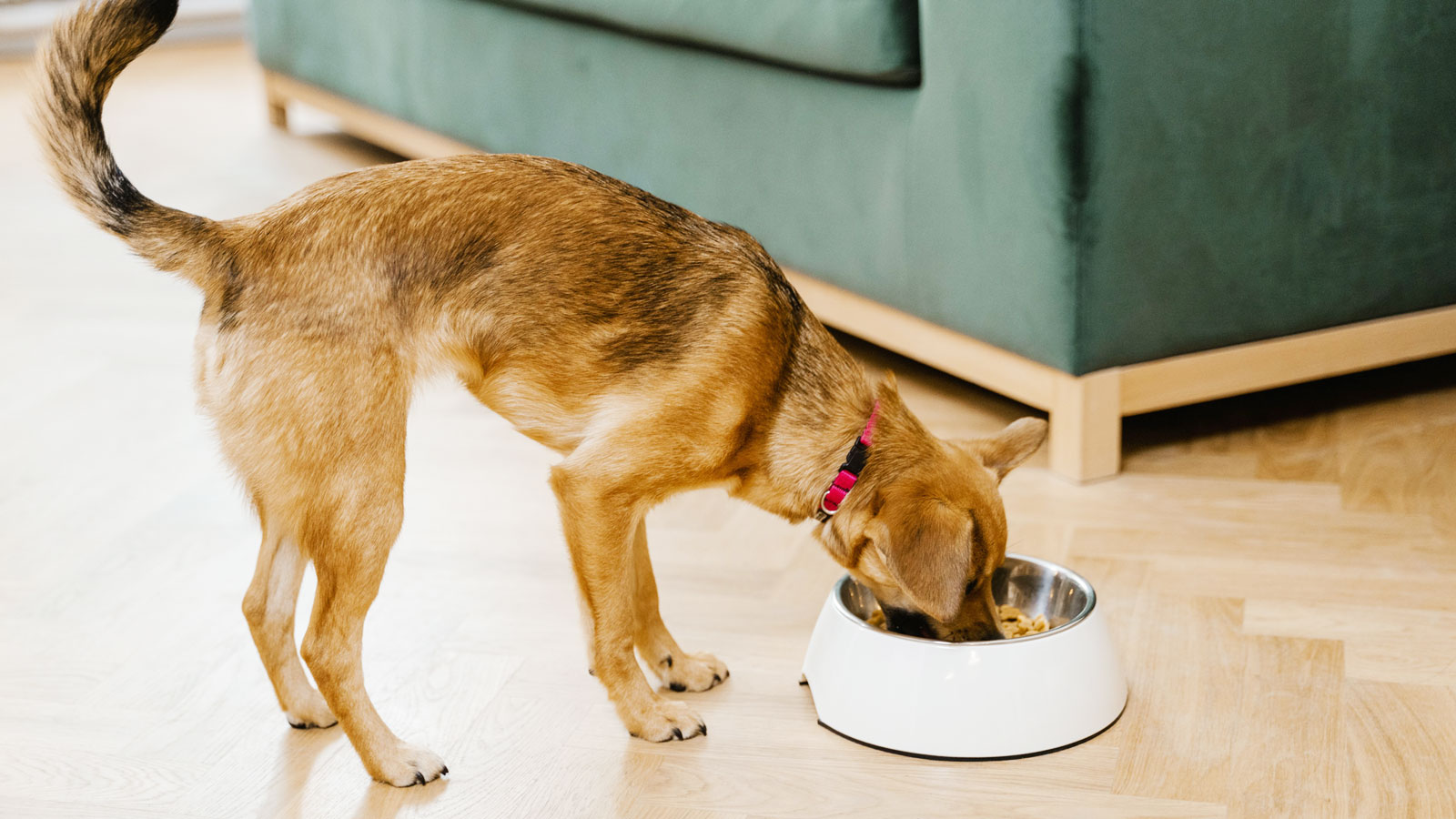
The absolute best way to prevent food guarding in a puppy or young adult dog is simple: put the food down, step away, and let them eat in complete peace.
This approach is now widely supported by veterinary behaviorists and positive-reinforcement trainers: security and predictability are the foundation of a confident dog. When a puppy realizes that once their bowl hits the floor, it belongs 100% to them and no one is going to bother, micro-manage, or touch them, the anxiety that drives resource guarding doesn’t have a chance to develop. They learn to relax during mealtimes because there is zero threat of conflict.
Where Real Trust is Actually Built
A truly balanced relationship with your dog is not established at the dinner bowl. If you have to micromanage your dog’s food to prove your authority, you haven’t built real respect.
True trust, focus, and healthy household dynamics are built entirely outside of feeding times.
You establish your role as a trusted leader through:
- Obedience training sessions.
- Clear, consistent boundaries during daily life.
- Practicing loose leash walking.
- Interactive, play-based reward games.
When a dog learns to respect and look to you for guidance during training, that baseline of trust carries over into everything else they do. A dog who fundamentally trusts their handler outside of the kitchen won’t feel the need to aggressively defend their bowl inside the kitchen. You will achieve a relationship where you could safely handle or move away a resource if an absolute emergency required it. Not because you drilled them at dinner, but because they trust your leadership implicitly.
The Multi-Dog Rule: Separate Feeding is Non-Negotiable
If you live in a multi-dog household, the rule of “leaving the dog alone” applies to the other dogs just as much as it applies to the humans.
Forcing dogs to eat side-by-side or in the same open room creates massive, invisible social pressure. Even if your dogs seem to get along, making them eat in close proximity forces them to constantly monitor each other. This silent tension is a primary trigger for household dog fights and severe food aggression.
To set your dogs up for success, always feed your dogs completely separated by physical barriers.
- Feed them in separate closed rooms.
- Use sturdy crates.
- Utilize secure baby gates.
When every dog knows that another dog cannot physically enter their space to steal their meal, the primal need to defend the bowl vanishes. Eating becomes a relaxing, stress-free routine rather than a competitive event.
At Gargens von Lotta we accept just two dogs at a time for boarding or training, so your dog never faces the social pressure, noise, or feeding tension of a high-volume kennel. Every meal is private, calm, and stress-free. We’re located in Sandy Springs, GA. Space is limited – visit our Boarding Page to learn more.
Protect Their Peace
True relationship-building is rooted in mutual respect and clear, predictable signals. By respecting your dog’s right to a quiet, uninterrupted meal—and protecting them from the pressure of other pets or hovering humans—you eliminate the friction that causes behavioral regressions. Let them eat in peace, build your bond on the training field, and watch how quickly your dog learns to trust you.
One important note:
if your dog is already showing signs of guarding — stiffening, growling, or snapping over food, “leave them alone” isn’t a complete fix on its own. Existing guarding behavior can escalate and is best addressed with hands-on, professional guidance rather than trial and error at home.
If that sounds like your dog, request a training evaluation. We’ll build a plan to rebuild trust around mealtime safely, for both your dog and your household.